The Smart Rental Index, and why your building now counts.
In January 2025 Dubai swapped its RERA rental index for one that works building by building. The cap on increases didn't change, but the average it's measured against is now much closer to home. For owners with a renewal coming up.
Updated
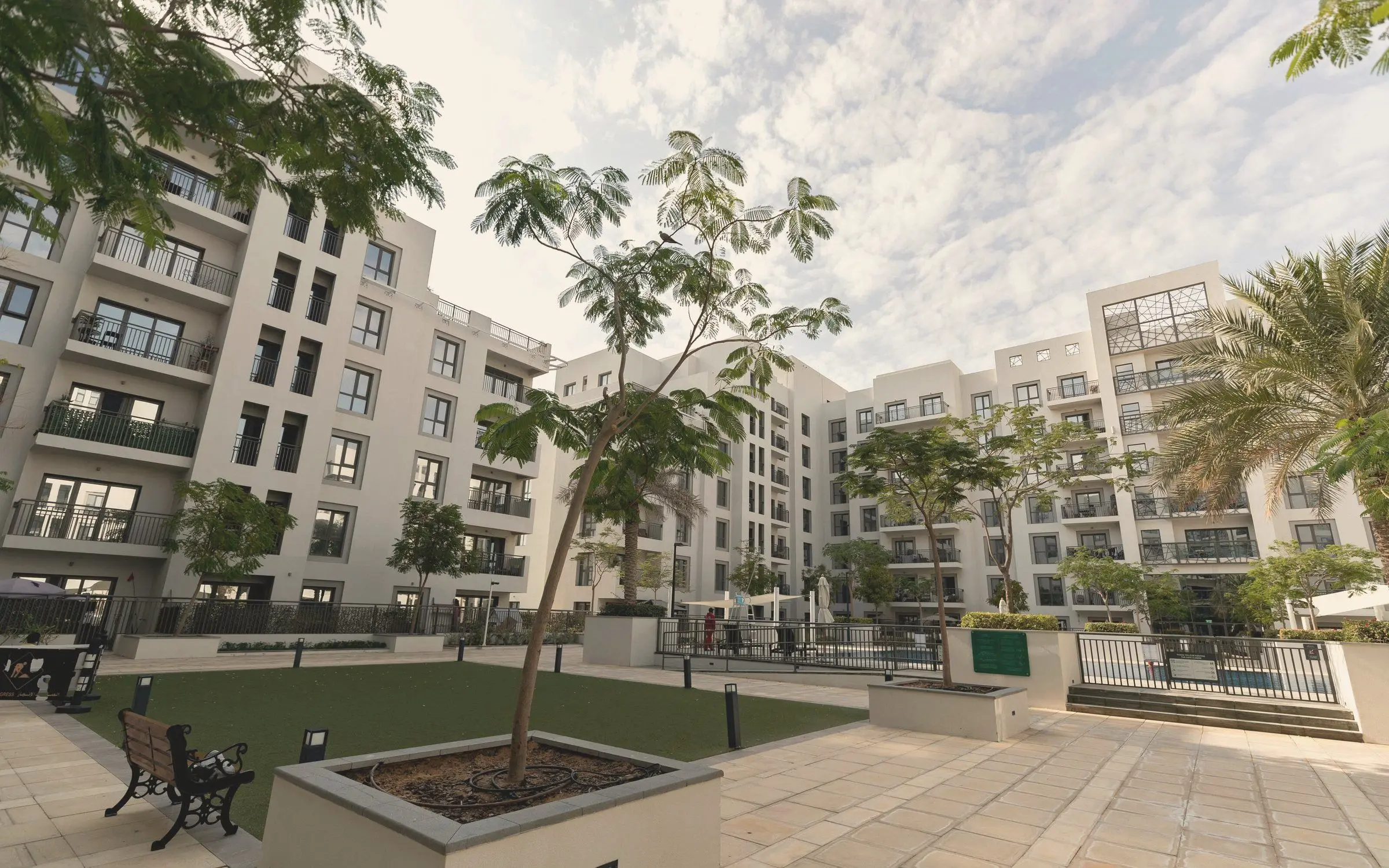
Since January 2025 the Smart Rental Index has been the Dubai Land Department's benchmark for residential rents. It mixes registered Ejari contracts with a star rating, one to five, for each building. Out of that comes the average rent Decree 43 of 2013 uses to cap your increase at renewal. The brackets haven't moved. Within 10% of the average you can't raise anything, and if the rent is more than 40% below it you can go up to 20%.
In short
It took over from the old RERA rental index at the start of 2025. You still have the Decree 43 brackets, and still need 90 days' notice.
Residential buildings get one to five stars, and every flat in a building shares its rating.
In one community, similar flats can let for very different rents depending on the building. That's why an average for your building can land you in a different bracket.
Check the index fresh before each renewal; the Land Department says it can change daily.
What changed in 2025
Up to 2025 the rental index gave one average per area, building type and unit size, and refreshed it quarterly or yearly. So if you owned in a well-run tower, you were measured against the same number as the owner of the tired block down the road.
The Smart Rental Index switched on at the start of January 2025. It reads registered Ejari contracts, both old and new, then layers on a star rating for every residential building and where that building sits. The Land Department says it can update daily. When it launched it covered residential buildings over most of the city, freehold or not. Villas and commercial property were meant to come later.
The star rating
Every building gets somewhere between one and five stars. When the index launched, the Department said it looks at amenities and how good the finishes are, then maintenance and facility management, and location on top. It's the building that's rated, as a whole. Individual units might get their own rating later, the Department said.
A couple of things people miss. At launch only the building's owner got to see the rating; letting others see it was floated as a maybe. It isn't fixed, either. Upgrade the building and the owner can ask for a reassessment, and if the appraiser agrees the stars go up.
Why the building matters
Look at one-bed flats in Jumeirah Village Circle. More residential Ejari contracts started there this year than in any other named community, 25,970 by 8 November. From those we pulled every one-bed between 60 and 80 square metres.
| Building | Contracts | Typical size, sq ft | Median rent, AED / year |
|---|---|---|---|
| Seasons Community, Autumn | 64 | 664 | 50,000 |
| Diamond Views 3 | 107 | 720 | 55,000 |
| Bloom Towers | 189 | 726 | 66,000 |
| Binghatti Amber | 240 | 694 | 70,000 |
| Binghatti Corner | 201 | 686 | 72,000 |
| Luma Park Views | 214 | 838 | 80,000 |
| The Autograph | 54 | 797 | 100,000 |
Registered Ejari contracts for one-bedroom apartments of 60 to 80 sq m in Jumeirah Village Circle, starting 1 January to 8 November 2026, new and renewed. Median annual rent per building. Selected from the 47 buildings with at least 40 such contracts.
Put all 5,846 contracts together and the median comes out at AED 72,000. Split them by building, though (we kept the 47 with at least 40 contracts each), and the medians run anywhere from AED 50,000 up to AED 100,000. Same sort of flat, roughly the same size. You might think new lets versus renewals explains it. It doesn't: both had the same median across the 5,846, AED 72,000. What differs is the building, and the flats inside it.
So picture your tenant paying AED 60,000. Measured against the community median of AED 72,000 they're 17% below, and that's the 5% bracket. But suppose comparable flats in your building let for around AED 55,000. Now they're above the average, and you can't raise the rent at all. We don't know exactly how the index weighs each input. Take this as a reason to look up your own building, and don't read it as a forecast of the index figure.
The brackets, unchanged
The ceiling still comes from Decree 43 of 2013. All the index does is hand it the average. If you want the full workings, including a JVC example and what happens when a tenant pushes back on a rise, see our guide to rent increases in Dubai.
| How far the rent is below the index | Maximum increase at renewal |
|---|---|
| Up to 10% below | 0% |
| 11% to 20% below | 5% |
| 21% to 30% below | 10% |
| 31% to 40% below | 15% |
| More than 40% below | 20% |
Decree No. 43 of 2013 governing rent increases in the Emirate of Dubai, measured against the average rent the Smart Rental Index gives for comparable units.
Timing still decides whether you get it
Article 14 of Dubai's rental law (Law 26 of 2007, as amended by Law 33 of 2008) says you must tell the tenant about any rent change at least 90 days before the contract ends. The index might shift between the day you check it and the renewal. So when you send the notice, save a copy of the figure you used.
How the index works is taken from Gulf News, Khaleej Times and The National, reporting its launch in January 2025, together with the rules in Decree 43 of 2013 and Law 26 of 2007 as amended. The JVC rents come from Mulki's own count of registered Ejari contracts and aren't the index's figures. Not legal advice. Check the index figure for your own unit before you serve notice.
Questions
What is the Dubai Smart Rental Index?
How is it different from the old RERA rental index?
What is a building star rating in Dubai?
How do I check the rental index for my unit?
Can the landlord raise the rent because the building got a better rating?
Does the index limit the rent for a new tenant?
Mulki tells you the legal ceiling on every renewal, 90 days before it is due.